
Flame-retardant polycarbonate
PC-FR

PC-FR: Tested V-0 flame behaviour with high impact resistance and thermal stability.

PC-FR is a specialist polycarbonate for protective casings, electronics and industrial components where flame propagation is part of the risk assessment. The reference grade passed UL 94-2023 V-0 testing and combines that behaviour with 113°C HDT and unusually high impact strength.

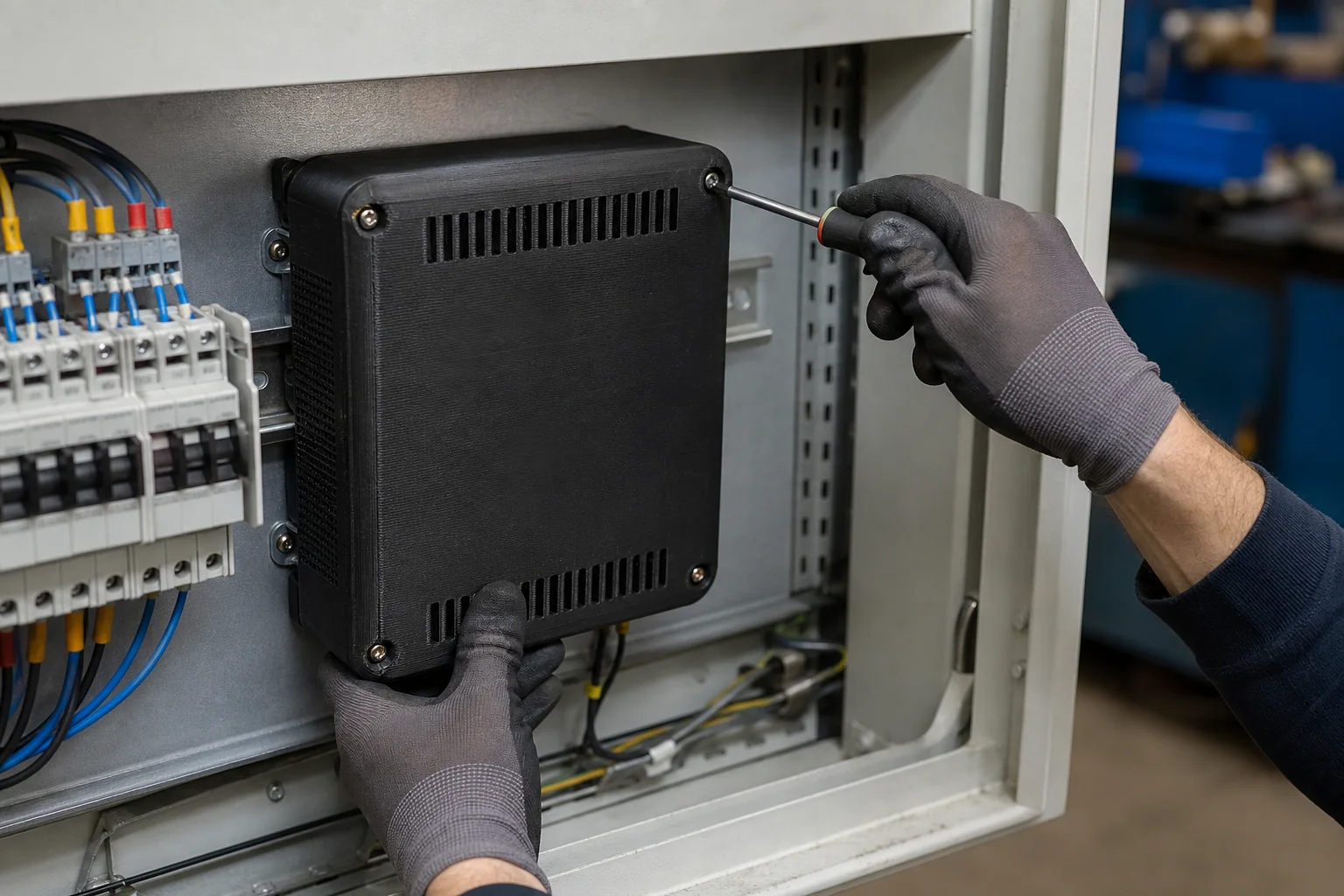
PC-FR printed electrical enclosure being inspected inside an industrial control cabinet
Representative applicationFlame-retardant electrical protection inside control equipment

The engineer’s read.

Material family names are not specifications. This page anchors the discussion to a named commercial grade and published printed-specimen data, then translates that data into practical selection and design guidance.

What it brings

PC-FR is a specialist polycarbonate for protective casings, electronics and industrial components where flame propagation is part of the risk assessment. The reference grade passed UL 94-2023 V-0 testing and combines that behaviour with 113°C HDT and unusually high impact strength.

Selection verdict

Choose PC-FR when flame behaviour is a defined requirement alongside toughness and useful heat resistance.

Printed properties.

Orientation, conditioning and geometry can move finished-part performance materially. Use these figures to compare candidate materials—not as guaranteed minimums.

PropertyRepresentative valueTest / context
Density1.18 g/cm³Manufacturer TDS
Tensile strength60 ± 4 MPaManufacturer TDS
Elongation at break2.4 ± 0.3%Manufacturer TDS
Flexural modulus · XY1.89 ± 0.07 GPaManufacturer TDS
Flexural strength · XY90 ± 4 MPaManufacturer TDS
Impact strength · XY55 ± 2.1 kJ/m²Manufacturer TDS
HDT · 0.45 MPa113°CISO 75
Vicat softening114°CISO 306
Flame classificationV-0 · UL 94-2023 testManufacturer test report

XY values normally represent flat-printed specimens. Z-direction strength can be substantially lower. Final production settings should be qualified on representative geometry.

Selection logic.

A useful material choice starts with load case, temperature, environment, duty cycle and failure consequence—not the strongest number on a datasheet.

Advantages

  • Passed UL 94-2023 V-0 vertical-burning testing for the reported specimen
  • Higher published impact strength than the reference unmodified PC
  • Good heat stability and dimensional retention
  • Suitable foundation for protective electrical and mechanical housings

Watch-outs

  • A material test result does not automatically certify every printed part or end product
  • Printed thickness, orientation, colour and geometry can affect flame behaviour
  • Lower stiffness than leading carbon-fibre structural composites

Strong applications

Electronics enclosuresPower-supply housingsAutomotive electrical componentsProtective casingsIndustrial control hardwareMechanical safety covers